USA - A return to the gold standard by the United States within the next five years now seems likely, because that move would help the nation solve a variety of economic, fiscal, and monetary ills, Steve Forbes predicted during an exclusive interview this week with 'Human Events'.
SPAIN - A magnitude 5.3 earthquake has toppled several buildings in southern Spain, near the town of Lorca, killing at least four people, officials say. The quake struck at a depth of just 1km (0.6 miles), some 120km south-west of Alicante, at 1850 (1650 GMT), the US Geological Survey reported. TV shots showed rescue workers rushing through debris-littered streets.
ROME, ITALY - Thousands of people are reported to be staying out of Rome for the next few days, over fears the city will be hit by a huge earthquake. The panic was sparked by rumours that seismologist Raffaele Bendandi, who died in 1979, predicted the city would be devastated by a quake on 11 May.
USA - The dollar is losing its position as the world's leading currency, but it's not only the euro which will benefit. In the future, economists predict, up to five different currencies will dominate the global financial system.
GERMANY - Germany is on the cusp of a 'golden decade' after exports surged to a record high, experts said last night. The country's exports hit 86 billion pounds in March - the biggest figure since records began in 1950, and 7.3% higher than in February.
GENEVA, SWITZERLAND - The United Nations' flagship agency for global refugee relief, which has nearly doubled its multibillion-dollar budget in the past two years, is struggling with a software fiasco that makes it virtually impossible to track systematically how well it is actually helping the victims of war, famine, drought and other disasters, according to an internal auditing report.
USA - The Navy will allow its chaplains to officiate same-sex marriages once the military's ban on gay marriage is officially lifted this summer, according to a new memo written by Navy's head chaplain, Rear Admiral Mark Tidd. The memo's guidance, which serves to train chaplains on a number of new procedures to be instituted along with the repeal of don't ask don't tell, went through a rigorous legal review before being issued.
UK - As much as we all enjoy the warm weather, some rain would be welcome. The scale of just how dry the start of 2011 has been is evident in some fascinating data from one of Europe's latest Earth observation satellites. Smos senses the moisture in the top layers of soil, and it is very clear that the ground across the UK and much of Europe is now gasping for water.
UNITED NATIONS - The UN has expressed concern about the situation in the southern Syrian city of Deraa as a government crackdown on dissent continues. It said a humanitarian mission had not been allowed access to the city, and a UN agency had been unable to get medical supplies to refugees. Deraa has been cut off for the past two weeks, after troops and tanks were sent in to restore government control.
ITALY - Italy recently said it was ready to join in Nato's air attacks on targets in Libya - and with the announcement came a sense of history repeating itself. It was in Libya, almost exactly a century ago, that a young Italian pilot carried out the first ever air raid.
USA - The southern US city of Memphis is coping with flood levels not seen since the 1930s, which have forced people from at least 1,300 homes. The Mississippi River was expected to crest at 48ft (14.6m) late on Monday or early on Tuesday in the Tennessee city. The record river height of 48.7ft was set in February 1937 during one of the worst Mississippi floods in US history.
USA - Few Americans realize that the European Union is among the most deceptive institutions on the planet. It is even less democratic than the Third Reich ever was, with ambitions that rival the erstwhile thousand-year plans of the late, unlamented Reichskanzler.
EUROPE - A secret meeting of EU finance ministers in Luxembourg on Friday has generated suspicions that a second bailout may soon be required for Greece's stricken economy. Most German commentators agree that Athens' departure from the euro zone or an overly swift restructuring of the country's debt could have drastic consequences.
BOSTON, USA - If you thought the housing crisis was bad, think again. It's worse. New data just out from Zillow, the real-estate information company, show house prices are falling at their fastest rate since the Lehman collapse. Average home prices are down 8% from a year ago, 3% over the quarter, and are falling at about 1% every month, according to Zillow.
DALLAS, USA - The Mockingbird DART station and the surrounding area, including the Angelika Theater, were evacuated Saturday after a police dog alerted authorities to a passenger onboard with two suspicious packages, a spokesman said.
Disclaimer:
The views expressed in this section are not our own, unless specifically stated, but are provided to highlight what may prove to be prophetically relevant material appearing in the media.
“Just what is an APOSTLE?”
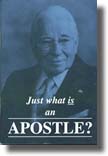
Today we find the Church of God in a “wilderness of religious confusion!”
The confusion is not merely around the Church – within the religions of the world outside – but WITHIN the very heart of The True Church itself!
Read online or contact email to request a copy